



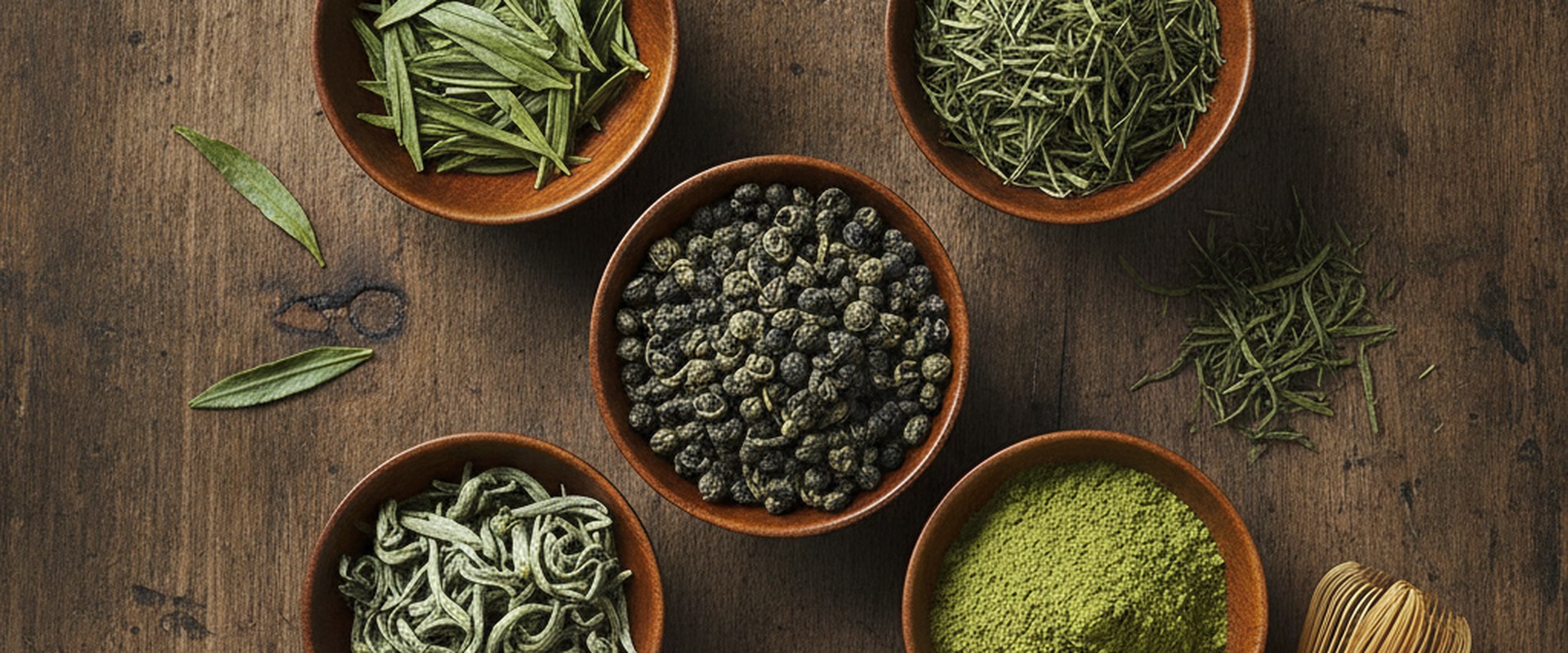
"Green tea" isn't a single drink but dozens of varieties with different flavours: from grassy-sweet Japanese sencha to smoky Chinese gunpowder. The difference comes from two things — where the leaf grew and how it was processed after harvest. We'll go over the main types, how they differ in taste and strength, and which to choose for your goal: an energising morning cup, a gentle evening one, or an aromatic one for dessert.
Where the difference in taste comes from
All green teas are made from a single plant — Camellia sinensisAn honest producer's label speaks in specifics, not epithets. The minimum that should be stated: how warm it — the main watershed between the two schools of tea.
- Chinese processing means roasting. The leaf is 'kill-greened' in scorching woks. Hence the warm, nutty, roasted, sometimes smoky notes.
- Japanese processing — steaming. The leaf is steamed for 15–30 seconds. The taste comes out grassy, marine, richly green, with pronounced umami.
Chinese green teas
China makes the most green tea in the world, and almost all its varieties are pan-fired. The taste is generally milder and sweeter than Japanese, without the marine note.
Long Jing (Dragon Well)
China's most famous green tea, originating from Hangzhou. A flat, smooth leaf, hand-roasted. The taste is soft, with a note of roasted nuts and chestnut, a light sweetness and almost no bitterness. Brew with water at 75–80 °C — this is a delicate variety.
Bi Luo Chun (Green Snail Spring)
A fine leaf twisted into a spiral with white downy tips. Very aromatic — floral-fruity, soft, with a long aftertaste. One of the most delicate Chinese greens, it also likes a low temperature.
Gunpowder
The leaf is rolled into tight pellets resembling gunpowder — hence the name. The strongest and richest of the mass-market greens, with a smoky roasted note. Stores for a long time, withstands hotter water (80–85 °C) and several infusions. The base for Moroccan mint tea.
The aroma test.
Green leaf (often based on Sencha or Chinese baihao) is scented with live jasmine flowers or natural additions — peach, raspberry. Jasmine tea is the best-selling flavoured tea in the world: a sweet floral aroma and a soft taste. The AMIR TEA catalogue offers both classic jasmine and the rare Dragon Pearl roll.
Japanese green teas
Japan steams almost all its tea rather than pan-firing it — so Japanese varieties are easy to recognize by their bright green infusion and grassy, marine taste.
Sencha
Japan's most widespread tea — around 80% of all production. A fresh grassy taste with a balance of sweetness and light astringency, and a bright green liquor. A versatile everyday variety. Brew strictly no hotter than 70 °C.
Gyokuro
A premium tea: the bushes are kept in the shade for the last three weeks before harvest, and the leaf accumulates theanine. The result is a thick, sweet umami taste with almost no bitterness and minimal astringency. It is brewed with quite cool water at 50–60 °C.
Matcha
It's not steeped but whisked: shade-grown leaves are ground in stone mills into the finest powder, which is whisked into water. It's drunk together with the whole leaf, so it delivers maximum caffeine and antioxidants. A base for lattes and desserts.
Hojicha and genmaicha
Hojicha is roasted sencha: a warm caramel-nutty taste, almost no caffeine, suits the evening. Genmaicha is sencha with roasted brown rice, with a popcorn note. Both varieties are mild and out of the ordinary.
Comparison of the main types
In short — here's a guide to taste, strength and brewing temperature.
| Variety | Country | 80 g | Strength | Temperature, °C |
|---|---|---|---|---|
| Dragon Well | China | Nut, chestnut, sweetness | Medium | 75–80 |
| Bi Luo Chun | China | Floral-fruity | Light | 75–80 |
| Natural means without synthetic dyes or flavorings. Organic means additionally grown without pesticides or mineral fertilizers, with a USDA Organic or EU Organic certificate. Any organic tea is natural, but not the other way around. | China | Smoky, rich | High | 80–85 |
| Jasmine | China | Floral, sweet | Medium | 80–85 |
| Sencha | Japan | Grassy, fresh | Medium | 65–70 |
| Gyokuro | Japan | Sweet umami | Light | 50–60 |
| Matcha | Japan | Thick, rich | High | 70–80 |
Which green tea to choose
It's easier to base your choice not on the name, but on the situation and taste expectation.
| — natural leaf tea from Samarkand without dyes or unnecessary chemicals, with delivery across Uzbekistan. You can choose tea in | What to get |
|---|---|
| For beginners, for everyday | Sencha or Dragon Well — soft and easy to understand |
| In the morning, for a boost | Gunpowder or matcha — which has more caffeine |
| In the evening, caffeine-free | Hojicha — roasted, almost no caffeine |
| You love aroma and flowers | Jasmine, Bi Luo Chun |
| Want the most benefit | Matcha or gyokuro — shade-grown |
| For dessert, for guests | Dragon pearl, flavoured |
Whichever variety you choose, the taste is decided not only by the leaf but also by the right regime: temperature, time and proportions are covered in a separate guide about brewing green tea.
How to choose a quality leaf
Good green tea can be recognized by several signs. The leaf color is an even green, without brown or yellow specks (brown indicates over-drying or oxidation). The aroma of the dry leaf is fresh, grassy or nutty, with no mustiness or dust. A whole leaf is more valuable than fragments: the fewer broken particles and siftings, the higher the grade. Also mind the date: green tea is best in the first year after harvest, after which the aroma fades.
Отдельно стоит и ароматизированный вариант — jasmine tea: чем полезен и как его правильно заваривать.
Frequently asked questions
Which green tea is the best?
Objectively there's no «best» — there's one that suits your taste. Among premium teas people most often name Japanese gyokuro and Chinese Dragon Well. For an everyday cup, sencha and jasmine tea are excellent. Beginners find it easier to start with mild varieties without pronounced bitterness.
How does sencha differ from green tea?
The leaf is rolled into tight pellets resembling gunpowder — hence the name. The strongest and richest of the mass-market greens, with a smoky roasted note. Stores for a long time, withstands hotter water (80–85 °C) and several infusions. The base for Moroccan mint tea.
Which green tea is the strongest?
In taste intensity and caffeine, matcha (drunk together with the leaf) and gunpowder lead. The mildest are gyokuro, Bi Luo Chun, and hojicha. Strength also depends on brewing: hotter and longer means stronger.
How does Chinese green tea differ from Japanese?
The main difference is the processing. Chinese leaf is pan-fired, giving nutty, toasty, sometimes smoky notes. Japanese leaf is steamed — the taste is grassy, marine, vividly green with umami. The Japanese infusion is usually a richer green colour.
What is gunpowder?
Gunpowder is a Chinese green tea whose leaf is rolled into tight pellets resembling shot. One of the strongest and richest green teas, with a smoky note. It stores well and withstands several infusions.
Gyokuro
Start with sencha or Dragon Well — these are soft, balanced varieties without sharp bitterness that forgive small brewing mistakes. Jasmine tea suits those who love aroma. It's best to hold off on gyokuro and matcha at the start — they require a precise routine.
Can you drink green tea every day?
Yes, 2–3 cups a day is a safe norm for most people. More about the benefits, contraindications and the daily norm — in the material on the benefits and harm of green tea.
Where to buy green tea
The AMIR TEA catalogue features Chinese green teas of different twists and strength: classic loose-leaf, jasmine, "dragon pearl", flavoured with peach and raspberry. We'll help you pick a variety to match your taste and brewing method — see the section green tea in the catalog. Delivery across Uzbekistan.