



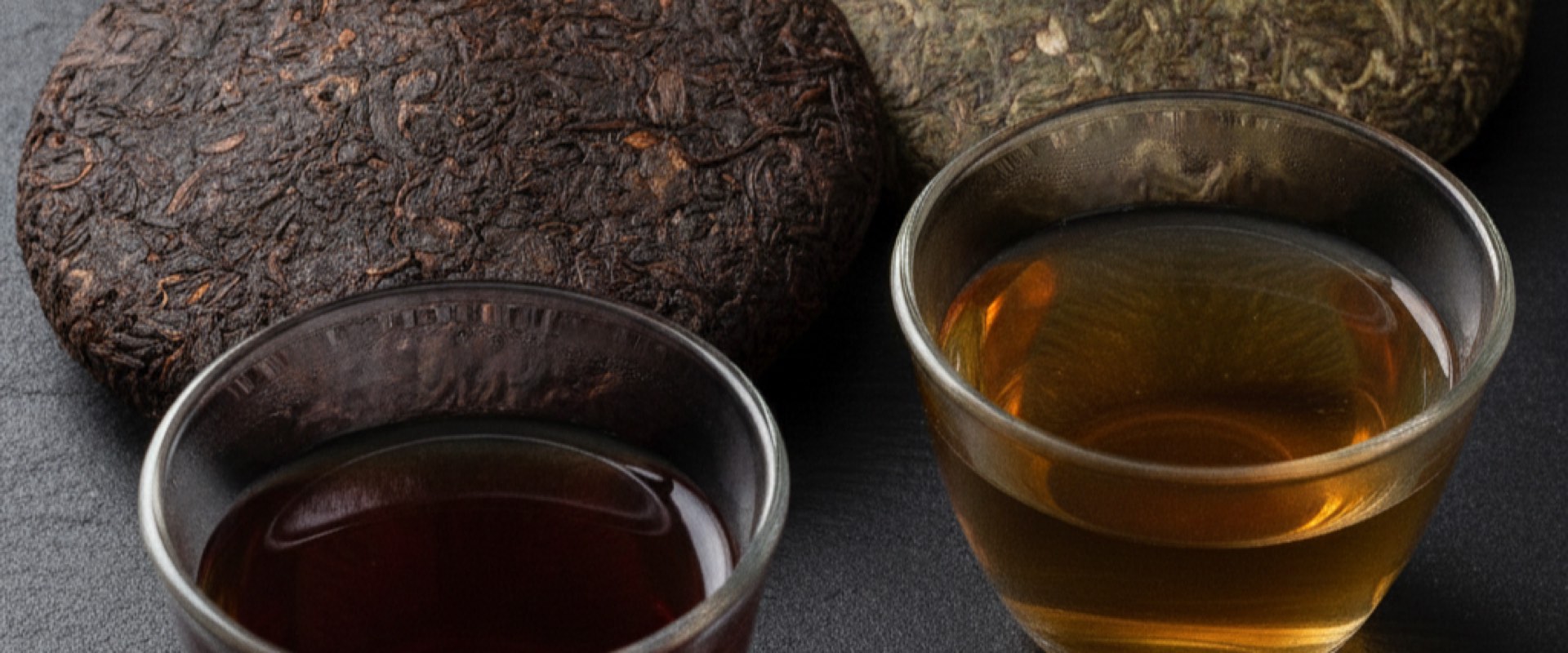
Shou and sheng are two types of pu-erh that differ in the way they are fermented. Sheng (raw, "green") ferments naturally over the years, while shou (ripe, "black") goes through an accelerated artificial fermentation in 40–60 days. That is where all the difference comes from: shou has a soft, earthy taste and a dark-red infusion right away, while sheng has a bright, astringent character that unfolds with age. Below we break down how they really differ and which pu-erh to choose for yourself.
What pu-erh is and what fermentation has to do with it
Pu-erh is a post-fermented tea made from the Yunnan large-leaf variety Camellia sinensis var. assamica. Unlike black tea, where the leaf oxidises through its own enzymes, pu-erh ferments further with the help of microorganisms — mould fungi and bacteria. It is precisely this microbial fermentation that gives pu-erh its recognisable 'aged' taste and its ability to improve over time.
Pu-erh is divided into two types by how this fermentation proceeds: naturally and slowly (sheng) or forcibly and quickly (shou). It's not 'better or worse', but two different drinks with different philosophies. If you're only just getting to know the category, take a look at our overview, how to brew pu-erh: water, temperature, infusions.
Sheng pu-erh: raw tea that matures over decades
Sheng (生, "raw") is the original, classic form of pu-erh, known for hundreds of years. The freshly picked leaf is withered, pan-fired, rolled, sun-dried, and pressed into cakes. Then the tea ages naturally — from several years to 30–50 and more, slowly fermenting in warehouse conditions.
Young sheng (1–3 years) is bright, astringent, with a grassy bitterness and floral-fruity acidity, the liquor pale yellow. Over the years the bitterness fades, giving notes of dried fruit, honey and wood, and the liquor darkens to amber-orange. A good aged sheng is prized like a vintage wine and costs accordingly.
Shou pu-erh: accelerated fermentation in two months
Shou (熟, «ripe») appeared recently — the technology wo dui (wet piling) was developed in 1973–1975 at the Kunming and Menghai factories to achieve the taste of aged pu-erh without years of waiting. The leaf is heaped into piles, moistened and held at 50–65 °C under control for 40–60 days. During this time microorganisms drive the fermentation that takes sheng decades.
The result is a dark brown, almost black leaf and a deep red-burgundy infusion. The taste is soft and earthy, with notes of wet wood, prune, cocoa, sometimes nut. Shou isn't bitter, needs no aging and is ready to drink right away — which is why it's more popular with beginners.
Shou and sheng pu-erh: the main differences in one table
To avoid confusion, here's a summary of the key parameters — from production method to price and effect.
| Parameter | Sheng (raw) | Shou (ripe) |
|---|---|---|
| Fermentation | Natural, years and decades | Loose leaf or in bags |
| Drink it weak and never on an empty stomach | Greenish-brown | Dark brown, almost black |
| Infusion colour | From pale yellow to amber | Cold green tea keeps in the fridge for a day. Lemon, mint or cucumber are added to the finished drink, not during brewing — that way the aroma stays cleaner. |
| 80 g | Astringent, floral, with a hint of bitterness | Soft, earthy, slightly sweet |
| Ageing | Improves over 10–50 years | Ready right away, keeps without a spike |
| Effect | Invigorating, «tea drunkenness» | Gently warms, relaxes |
| Who it suits | For the experienced, connoisseurs of aging | For beginners, for everyday |
Which pu-erh to choose: shou or sheng
A simple rule: you're just getting acquainted — take shou. It forgives brewing mistakes, doesn't turn bitter, has a clear "warm" taste and costs less than a young quality sheng. It's the ideal everyday pu-erh, especially in the cold season.
Sheng is worth buying if you've already got a taste for pu-erh and want more depth: vivid aromatics, flavour that evolves from infusion to infusion, an invigorating effect. Young sheng is for those who love freshness and astringency; aged (10+ years) is for connoisseurs and collectors ready to pay for the age.
The effect also differs noticeably. Sheng invigorates markedly and gives that «tea drunkenness» (cha zui) — a light euphoria and clarity. Shou acts more gently: it warms, calms, and goes well in the evening and after a heavy meal. Both contain roughly equal caffeine, but fermentation makes shou's effect more even.
How to brew pu-erh
Pu-erh is pressed into cakes, tuo and bricks, so the first step is to carefully separate 5–8 g with a special knife, without crumbling the leaf. The water needs to be hot: 95–100 °C — unlike green tea, pu-erh isn't afraid of boiling water.
| Stage | How to make it | Why |
|---|---|---|
| Rinse | Pour and drain in 5–10 sec | 3 g of leaf per 200 ml of water — that's about a heaped teaspoon for rolled varieties or almost two spoons for bulky fluffy leaves. The most accurate way is to weigh it on kitchen scales. |
| Can green tea be brewed with boiling water? | 10–20 sec, water 95–100 °C | Reveal the taste without bitterness |
| Next | Add 5–10 sec to each infusion | Keep the intensity |
| Persistence | 8–12 infusions from one portion | Quality pu-erh is resilient |
Shou can be brewed bolder and stronger, it hardly turns bitter. Be more careful with young sheng: over-steeping gives sharp bitterness and viscosity, so keep the first infusions short. It's more convenient to brew in a gaiwan or a Yixing teapot — there it's easy to control the time of each infusion.
How to store pu-erh
Pu-erh is the only tea that is aged Camellia sinensis var. assamica, so that it gets better. Keep it at room temperature, at moderate humidity (60–70%), without airtight packaging — tea needs access to air for further fermentation. The main thing is to isolate it from foreign odors: pu-erh absorbs the smells of the kitchen, spices and perfume like a sponge.
Sheng, when stored properly, rises in value and improves over decades. Shou is already post-fermented, so it doesn't change abruptly, yet it too «rounds out» over a couple of years, losing the faint note of fresh stacking. A refrigerator and sunlight are off-limits for pu-erh.
Frequently asked questions
How does shou differ from sheng pu-erh in simple terms?
Shou is pu-erh with accelerated artificial fermentation (40–60 days): dark, soft, earthy, ready right away. Sheng is raw pu-erh that ages naturally over years: young it's astringent, aged it's soft and expensive.
These are two different drinks from the same raw material.
Shou pu-erh. It is not bitter, has a clear warm flavour, forgives brewing mistakes and costs less than a quality sheng. It is a comfortable place to start getting to know the category.
Which pu-erh is stronger and more invigorating?
Sheng invigorates more noticeably: its catechins and caffeine are more active, giving clarity and «tea drunkenness». Shou acts more gently and evenly, and can be drunk even in the evening.
How many times can pu-erh be brewed?
Quality pressed pu-erh withstands 8–12 infusions from a single 5–8 g portion. The flavour changes from infusion to infusion rather than simply fading. Cheap loose pu-erh yields noticeably fewer.
Is it true that pu-erh helps with weight loss?
Pu-erh improves digestion and subjectively eases heaviness after fatty food, but it doesn't "burn" fat on its own. Weight loss comes from a calorie deficit, not a cup of tea. More about such drinks in the article on tea for weight loss and how it works.
Which pu-erh is more expensive — shou or sheng?
Shou and sheng pu-erh: the main differences in one table
Can you drink pu-erh every day?
Yes, 1–3 cups a day is a normal amount for a healthy person. Shou is milder and suitable for everyday drinking; it's better not to drink strong sheng on an empty stomach to avoid discomfort.
Sheng (raw)
Pu-erh is almost always sold pressed — this makes it easier to store, transport and age: a pressed leaf loses its aroma more slowly and ferments more evenly. There are several shapes, and they affect only convenience, not taste.
- Natural, years and decades — the classic disc, most often 357 g. The most common form, convenient for long ageing.
- Tuo cha (nest) — a pressing in the shape of a bowl or dome, from 3 to 250 g. Small tuo of 5–8 g are handy for a single brew.
- Zhuan (brick) — a rectangular brick, historically made for transport by caravan. It breaks off easily into portions.
- Loose leaf — unpressed. It brews a little differently and is usually cheaper, but it stores worse than the pressed kind.
For a beginner it's easier to start with small tuo cha or loose shou — no pu-erh knife is needed and a portion is easy to measure out. Cakes and bricks are bought when you want to lay tea down for aging.
Improves over 10–50 years
In the catalog AMIR TEA — both shou and sheng pu-erh supplied directly from Yunnan: pressed cakes, tuo cha and loose tea of various ages. We have been selecting pu-erh for private clients and cafes since 2019, in Samarkand, and will help you choose one to your taste — a mild shou for every day or an aged sheng for deep tea sessions. See the range in the section pu-erh in the AMIR TEA catalogue.
Gently warms, relaxes the benefits and harms of pu-erh.