



Pu-erh is surrounded by myths: some expect it to burn fat and boost energy better than coffee, others fear "intoxication" and insomnia. The truth is in the middle. Let's get to the point and look at what pu-erh is really good for, who it can harm and when, how much to drink and how to choose a tea that won't disappoint.
What is pu-erh and how it differs from ordinary tea
Gentle tone. post-fermentationSupport for the heart and blood vessels.
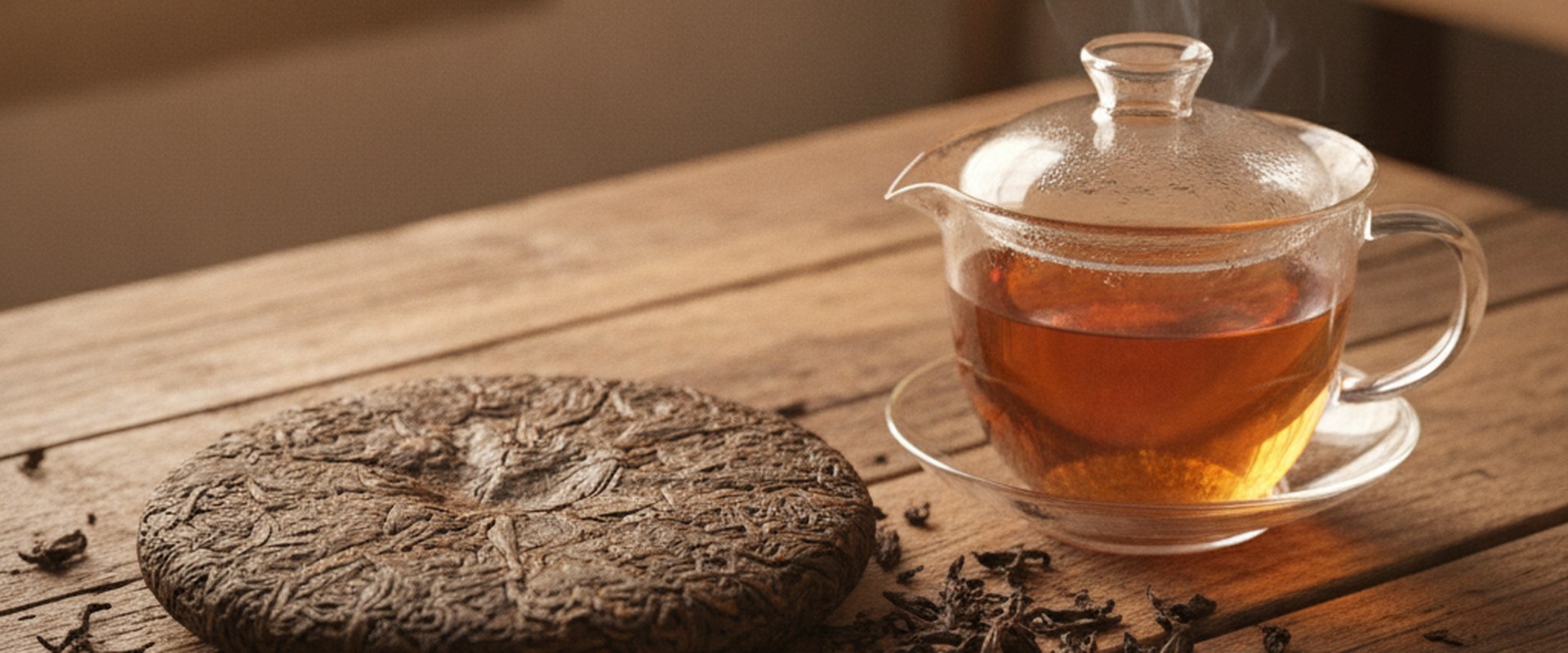
There are two fundamentally different pu-erhs: shou (dark, 'ripe', with accelerated wet fermentation) and sheng (green, maturing naturally over years). They differ both in taste and in their effect on the body — this is examined in detail in the article about the difference between shou and sheng pu-erh. In short: shou is milder for the stomach and the evening, sheng invigorates more strongly.
Composition: what works for your benefit in pu-erh
Pu-erh's benefits aren't magic but a very specific set of substances that remain in the leaf after fermentation:
- Polyphenols and catechins — natural antioxidants that help cells resist oxidation.
- Theaflavins and thearubigins — pigments formed during fermentation; part of tea's 'heart' benefit is down to them.
- Caffeine (theine) — a gentle stimulant; together with L-theanine it gives steady alertness without a sharp spike.
- Statin-like compounds — during the aging of shou pu-erh, substances form that studies link to a reduction in «bad» cholesterol.
- Trace elements — potassium, manganese, fluoride in small amounts.
How pu-erh benefits you: 5 proven effects
1. Aids digestion. Less caffeine, delicate taste
2. Gives steady energy. Pu-erh has enough caffeine to invigorate, but thanks to L-theanine the effect comes on gradually and lasts longer than coffee's, without shaky hands or a sharp «crash» an hour later.
— a gentle stimulant; together with L-theanine it gives steady alertness without a sharp spike. Regular, moderate consumption of fermented tea is linked in observational studies to a more favorable cholesterol profile. Pu-erh is not a medicine, but as a daily habit it works in your favor.
General rule: the more delicate the leaf, the lower the temperature. Green and white are brewed with 70–85 °C water so the leaf isn't scorched and doesn't turn bitter; red tea and pu-erh — with 95–100 °C water. A good leaf tea withstands several infusions, and each reveals the taste anew — don't rush to throw out the leaves after the first cup. See exact timings in the per-type guides above. Pu-erh itself does not «burn» fat, but it's a zero-calorie drink that dulls cravings for sweets and replaces snacks. How to fit it into your diet without illusions is covered in the piece on tea for weight loss.
5. Warms and invigorates more gently than coffee. Dark shou pu-erh is a good option for the cold season and for those who find coffee too harsh.
Harm and contraindications: when it's better not to drink pu-erh
Pu-erh isn't a harmless "herb" — it contains caffeine, and overuse has the opposite effect. Below is when you should be more careful.
| Situation | Why to be careful | What to do |
|---|---|---|
| Insomnia, anxiety | Caffeine stimulates the nervous system | Don't drink after 4–5 pm, choose a mild shou |
| Gastritis, an ulcer in flare-up | A strong infusion irritates the mucous membrane | Drink it weak and never on an empty stomach |
| Pregnancy and breastfeeding | Caffeine limit | Agree on the amount with a doctor, reduce the strength |
| Hypertension, arrhythmia | Caffeine affects blood pressure and pulse | In moderation, watching how you feel |
| Taking iron in tablet form | Tannins hinder iron absorption | Space tea and medication 1–2 hours apart |
Separately about "tea drunkenness" (in Chinese "cha zui") — slight dizziness, weakness and sweating after strong pu-erh on an empty stomach. It's not a myth, but not a danger either: it's enough to eat something sweet and not drink pu-erh on an empty stomach.
How much pu-erh you can drink a day
A safe guideline for a healthy adult is — 2–4 cups a day, that is roughly 6–10 grams of dry leaf. That is enough to get the benefits and not overdo it with caffeine. Beginners are better off starting with a light infusion: pu-erh is easy to brew too concentrated, and then even good tea will seem heavy.
How to brew pu-erh properly
Taste and benefit depend heavily on brewing. Key rules: pressed pu-erh is separated carefully (not crumbled into dust), always do a rinse — the first quick flush with boiling water is poured off to rinse away the dust and "wake up" the leaf, — and it is brewed with hot water at 95–100 °C in short flushes. Pu-erh withstands 5–8 infusions, unfolding gradually. Step by step, with timings and proportions — in a separate guide Drink it weak and never on an empty stomach.
How to choose and store good pu-erh
Cheap pu-erh in a sachet is almost always dust with a flat taste. Look for pressed cakes and tuo cha made from whole leaf, with a clean earthy aroma free of mustiness or mould. Store pu-erh in a dark, dry, ventilated place away from spices and coffee — it easily absorbs foreign odours. When stored correctly, sheng pu-erh only improves with the years.
Pressed shou and sheng pu-erhs from Yunnan are available in our in the pu-erh catalogue — from mild «warming» shou to invigorating aged sheng. And how this type fits into the overall system of Chinese tea — in the overview of types of Chinese tea.
Questions and answers
Does pu-erh raise or lower blood pressure?
Due to caffeine, strong pu-erh may briefly raise blood pressure a little. Most people tolerate a weak warm infusion calmly. With hypertension, drink it in moderation and watch how you feel.
Can you drink pu-erh every day?
Yes, 2–4 cups a day won't harm a healthy person, and after overeating it even aids digestion. The main thing is not to drink strong pu-erh on an empty stomach and not to overdo it in the evening.
Is it true that pu-erh helps with weight loss?
It doesn't burn fat directly. Pu-erh helps indirectly: it's a calorie-free drink that reduces sugar cravings and replaces snacks. Without adjusting your diet, tea alone isn't enough.
Why does pu-erh sometimes make your head spin?
This is "tea drunkenness" from a strong infusion on an empty stomach. It's not dangerous: eat something sweet and don't drink pu-erh on an empty stomach.
— a gentle stimulant; together with L-theanine it gives steady alertness without a sharp spike.
Shou pu-erh: it is milder, earthy, without sharp astringency and less invigorating. Sheng is brighter and stronger — it is worth moving on to it once you have got a feel for the taste.
Can you drink pu-erh at night?
Not advisable. Pu-erh contains caffeine, and an evening cup can disrupt sleep. It is best to have the last serving 5–6 hours before bed.
How many times can one pu-erh be brewed?
A quality pressed pu-erh withstands 5–8 infusions, and sometimes more. The flavour changes from one infusion to the next — that is part of the pleasure.
Пуэр — из бодрящих чаёв. Какой чай бодрит, а какой успокаивает, разложили по полочкам здесь.
The key points in brief
Pu-erh is good for digestion, gives steady alertness and supports the heart, but it's a caffeinated tea: a strong infusion on an empty stomach, late evening and GI flare-ups aren't for it. A safe amount is 2–4 cups a day of quality whole-leaf pu-erh. Amir Tea — natural tea from Samarkand with delivery across Uzbekistan; you can choose compressed shou or sheng in in the pu-erh catalogue at amirtea.uz.
Если интересует именно снижение веса — разобрали отдельно, как пить пуэр для похудения без вреда: pu-erh for weight loss.