



Pu-erh for weight loss doesn’t work the way ads promise: a cup of tea neither burns fat nor “dissolves” it in the body. Pu-erh has no direct fat-burning effect — no tea does. But as a working tool within a weight-loss system, pu-erh is genuinely useful, and that’s confirmed by simple calorie arithmetic, not magic.
The point is substitution. A glass of sweet latte is 180–250 kcal, a can of soda about 140 kcal, a biscuit with tea another 70–90 kcal. A mug of unsweetened pu-erh is 0–2 kcal. If over a day you swap two or three calorie-dense snacks for tea, you cut 300–600 kcal without ever feeling like you’re “on a diet.” That’s where the result comes from.
Below is an honest breakdown: how pu-erh helps, which type to choose, how many grams to brew, when to drink it, how much caffeine it has and who should avoid it. No “detox” or “flushing out toxins.”
Pu-erh doesn’t burn fat — and that’s fine
Fat is lost only in a calorie deficit: when the body spends more than it takes in from food. No drink overrides this law. Pu-erh doesn’t “flush fat out through the liver,” doesn’t “break down deposits” and doesn’t “clear away toxins” — the term “toxins” simply doesn’t exist in physiology, and the kidneys and liver handle cleansing on their own.
What pu-erh can actually do: give taste and ritual at zero calories, slightly dull appetite, gently energize thanks to caffeine and add minimal thermogenesis. All of these are supporting levers. They work, but only within an overall deficit. Drinking pu-erh while eating cake alongside it won’t help you lose weight at all. We say this honestly in our review of tea for weight loss: tea is a helper, not a pill.
How pu-erh actually helps
There are four mechanisms, and all of them are indirect. None “burns fat” directly, but together they make it easier to maintain a deficit — and it’s the deficit that decides the outcome.
Replacing calorie-dense drinks and snacks
This is the main lever. Pu-erh is rich, dark and full-bodied — it’s easier to swap out 3-in-1 coffee, sweet tea or cola for it. One such swap a day saves 120–250 kcal. Over a month that adds up to 3,600–7,500 kcal — the equivalent of 0.5–1 kg of fat you simply didn’t gain.
Reducing sugar cravings
A warm, full-bodied drink partly covers the urge for “something tasty.” The bitter, earthy taste of shou pu-erh curbs the desire for sweets better than plain water. It’s not appetite suppression by a pill, but an everyday trick: brew a mug and your hand no longer reaches for a candy.
Caffeine and mild thermogenesis
A cup of pu-erh (150 ml, 5–6 g of leaf) has roughly 30–70 mg of caffeine — less than an espresso (63–80 mg). Caffeine slightly speeds up metabolism and raises energy expenditure by 3–5% for a few hours. The effect is modest: tens of calories, not hundreds. But before a walk or workout, a cup of pu-erh gives energy without sugar and cream.
Ritual instead of stress-eating
The infusions, the aroma, the warm bowl — it’s a pause that often replaces a “nervous” trip to the fridge. In practice, the brewing ritual itself helps people more than any “fat-burning” properties. Five minutes for tea, and the urge to overeat passes.
Shou or sheng: which pu-erh to choose for weight loss
For an everyday “substitute” tea, shou pu-erh (ready-made, fermented) is more practical. It’s smooth, dark, almost without bitterness, drinks well without sugar and doesn’t irritate the stomach the way young sheng does. Sheng pu-erh is brighter and more invigorating, but it’s more astringent and hits an empty stomach harder. We covered the difference in detail in our article on shou and sheng pu-erh.
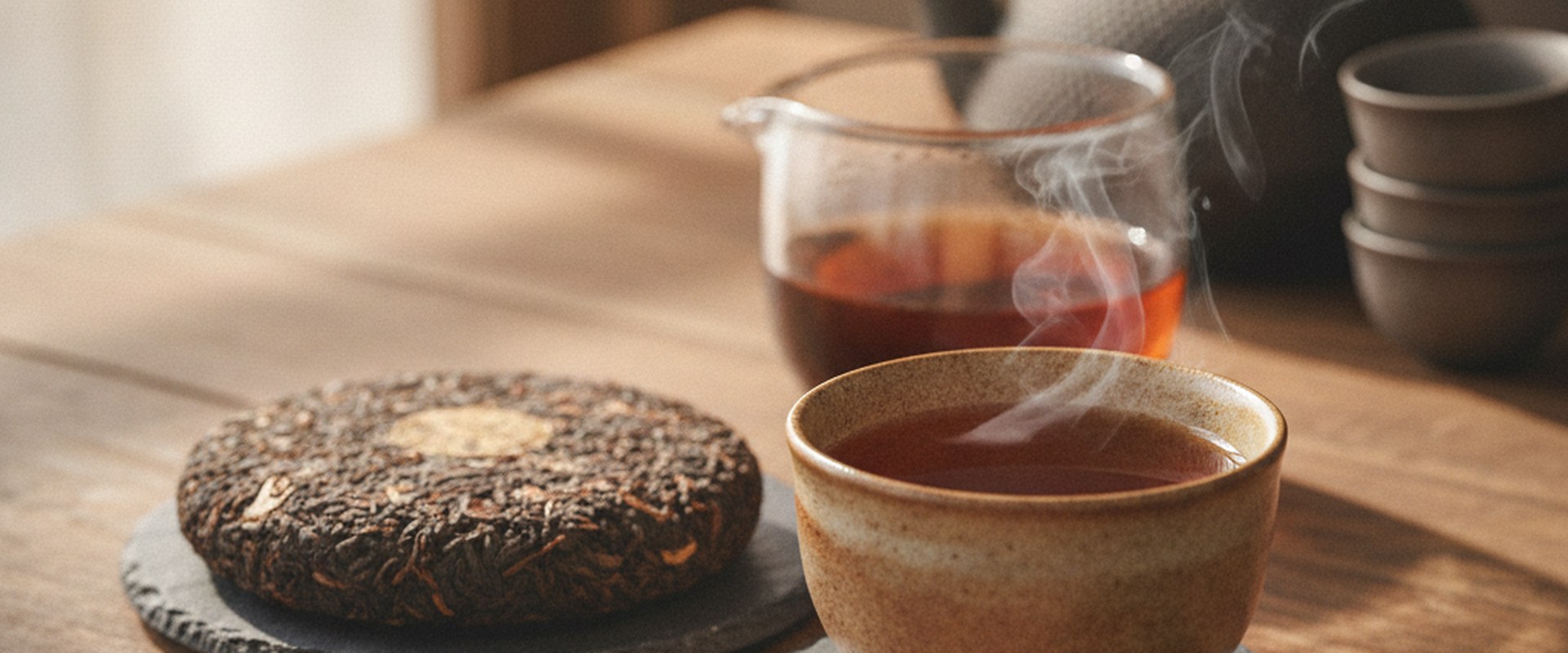
If the goal is simply to replace sugary drinks and drink tea a few times a day, start with a dense shou such as Ban Zhang Shou Pu-erh. It holds several infusions, has a rich taste, and one pressed cake lasts a long time. Other options are in our in the pu-erh catalogue.
Dosage schedule: how much, when and how to drink
The working norm is 2–3 cups of pu-erh a day, 6–9 g of dry leaf total for brewing. More isn’t better: excess caffeine causes jitteriness and disrupts sleep, and it has no effect on fat. Key rules: don’t drink on an empty stomach, don’t drink after 4–5 pm, and always without sugar.
| Time | What we drink | Volume | Strength (leaf per 150 ml) | Why |
|---|---|---|---|---|
| Morning, 8:00–9:00 | Shou pu-erh | 150–200 ml | 5–6 g | Energy instead of sugary coffee |
| 30–40 min after lunch | Shou pu-erh | 150 ml | 4–5 g | Replace dessert, remove sugar cravings |
| Afternoon snack, 15:00–16:00 | Shou or sheng | 150 ml | 4–5 g | Cover the “hungry window” without calories |
| Evening, after 17:00 | Not recommended | — | — | Caffeine disrupts sleep |
The schedule is approximate — adjust it to your routine. The essentials rest on three pillars: pu-erh instead of a calorie-dense drink, drinking after food (not instead of it), and skipping evening cups if you’re sensitive to caffeine.
How to brew so the taste works for you
Shou pu-erh is brewed with 95–100°C boiling water, sheng with slightly cooled 85–95°C water. The first infusion (10–15 seconds) is poured off — this rinses the leaf. Then steep for 10–30 seconds, increasing the time with each infusion. A good pu-erh withstands 5–8 infusions, so 5–6 g of leaf isn’t one mug but a full tea session. The process is described step by step in our guide Drink it weak and never on an empty stomach.
No sugar, honey, syrup or milk — they bring back into the cup exactly the calories the whole thing was started to avoid. If the taste seems too earthy, choose a milder variety or use less leaf, but don’t sweeten it.
How much caffeine pu-erh has and where the norm lies
The safe daily caffeine ceiling for an adult is about 400 mg (EFSA data). Pu-erh provides 30–70 mg per cup, so 3 cups is roughly 90–210 mg, with room to spare. Problems start when coffee, energy drinks and cola are added to the tea: then the total easily exceeds 400 mg and causes tachycardia, anxiety and insomnia.
For pregnant women the norm is lowered to 200 mg a day, so for them it’s at most 1–2 weak cups, and preferably after consulting a doctor. Pu-erh strength is easy to control: less leaf and shorter steeping means less caffeine.
Myths about “detox” and “fat flushing”
“Pu-erh flushes out fat” is a myth. Fat isn’t excreted in urine or bile “under the action of tea”; it’s oxidized in the mitochondria when there’s an energy deficit. “Pu-erh is a detox” is also a myth: the liver and kidneys detoxify the body, not a drink, and a healthy person doesn’t need “cleansing.”
A separate trap is “fat-burning teas” with senna and other laxative herbs. The minus on the scale after them is loss of water and bowel emptying, not fat. The water comes back within a day, and abusing laxatives harms the gastrointestinal tract. Real pu-erh doesn’t work that way and shouldn’t. More on the real pros and cons in our piece on the benefits and harms of pu-erh.
Contraindications: who pu-erh isn’t suitable for
Pu-erh isn’t a harmless “leaf water” — it has its limits:
- Gastritis and ulcers in flare-up — tannins and caffeine irritate the mucous membrane, especially on an empty stomach.
- Hypertension and arrhythmia — caffeine raises blood pressure and pulse; with unstable pressure, caution is needed.
- Insomnia and anxiety — evening cups worsen sleep.
- Pregnancy and breastfeeding — the caffeine limit is 200 mg a day; better agreed with a doctor.
- Taking iron — tannins hinder iron absorption, so tea is drunk not together with supplements but 1–2 hours later.
If you have a chronic illness, it’s worth discussing the intake schedule with a doctor. Pu-erh helps with weight loss only as part of a regimen, not against your health.
What to realistically expect from pu-erh
Pu-erh’s realistic contribution to weight loss is minus 0.3–0.7 kg a month thanks to the liquid calories and snacks removed, provided you don’t make them up elsewhere. It’s modest but steady and without breakdowns. Pu-erh won’t replace diet control and movement — it takes part of the load off willpower, making the deficit more comfortable. That’s its honest role.
The same principle works with green tea too — a milder alternative for everyday drinking: green tea for weight loss.
Frequently asked questions
Can you lose weight just by drinking pu-erh?
No. Weight loss comes from a calorie deficit, not tea. Pu-erh helps indirectly: it replaces sugary drinks (saving 120–250 kcal at a time) and dulls sugar cravings. Without diet control, one cup of tea changes nothing.
How many cups of pu-erh a day should you drink for weight loss?
The optimum is 2–3 cups, 6–9 g of leaf in total. That’s 90–210 mg of caffeine — within the 400 mg daily norm. Drinking more makes no sense: it doesn’t affect fat, and excess caffeine disrupts sleep and causes jitteriness.
When is it best to drink pu-erh for weight loss?
In the morning instead of sugary coffee, and 30–40 minutes after eating to replace dessert. Don’t drink on an empty stomach — it irritates the stomach. After 4–5 pm it’s better to skip it: caffeine worsens sleep, and poor sleep slows weight loss.
Which pu-erh is better for weight loss — shou or sheng?
For everyday tea, shou pu-erh is more practical: smooth, dark, easy to drink without sugar and less irritating to the stomach. Sheng is more invigorating but more astringent and harsher on an empty stomach. The type doesn’t affect fat burning — what matters is replacing calorie-dense drinks.
Is it true that pu-erh flushes out fat and toxins?
No, that’s a myth. Fat is oxidized in cells during an energy deficit, not “flushed out by tea.” “Toxins” don’t exist in physiology; the liver and kidneys handle cleansing. Pu-erh gives taste, ritual and mild thermogenesis — but it doesn’t break down fat.
Can you drink pu-erh on an empty stomach?
Better not to. Tannins and caffeine on an empty stomach irritate the mucous membrane and can cause nausea, heartburn and discomfort, especially with gastritis. Drink pu-erh after food or with a light snack.
How much caffeine is in pu-erh?
About 30–70 mg per 150 ml cup — less than an espresso (63–80 mg). The daily norm is up to 400 mg for an adult and up to 200 mg for pregnant women. Strength is lowered with less leaf and shorter steeping.
The key points in brief
Pu-erh for weight loss is a working tool, but not a fat burner. It replaces calorie-dense drinks and snacks, curbs sugar cravings and adds energy without sugar — while the result comes from a calorie deficit, which is easier to maintain with tea. Drink 2–3 cups a day without sugar, not on an empty stomach and not at night, choose a mild shou — and treat pu-erh as a helper, not a miracle. You can pick a variety in the Amir Tea pu-erh catalog with delivery across Tashkent and Uzbekistan.