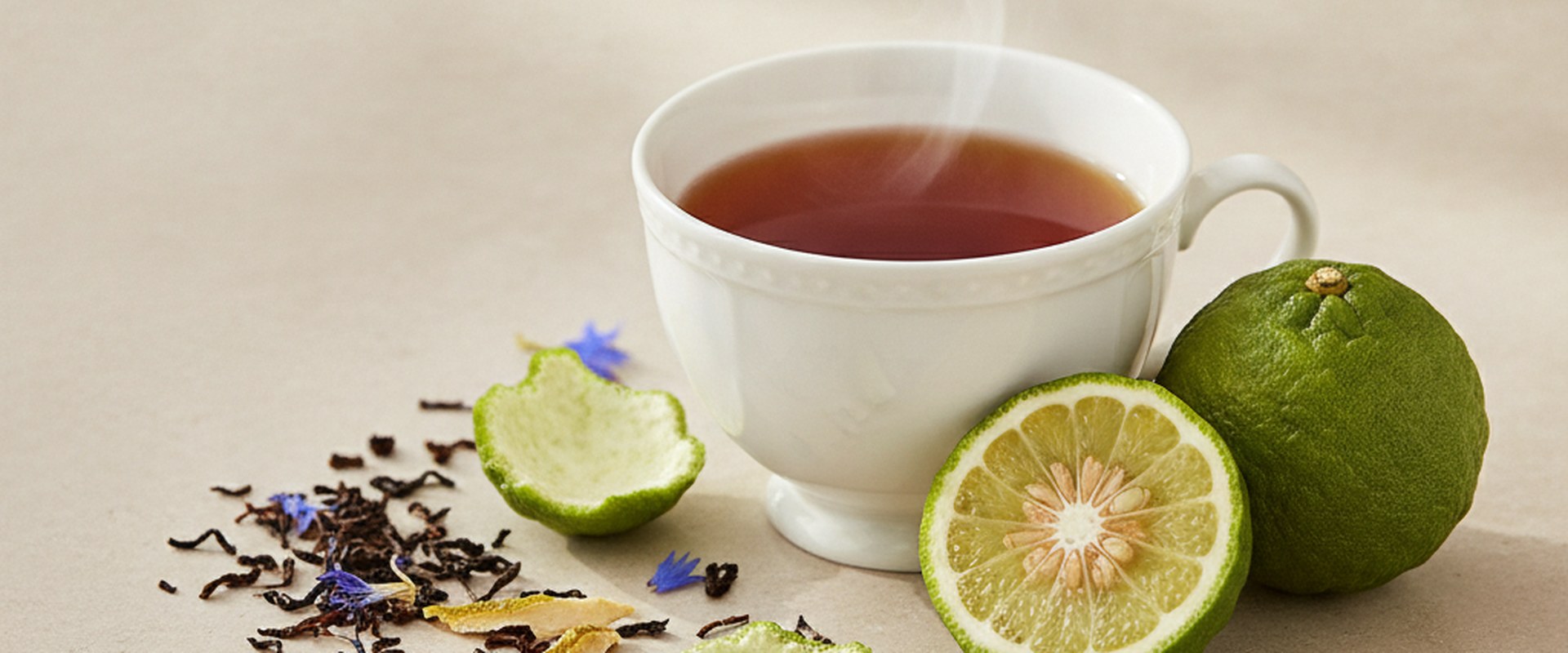



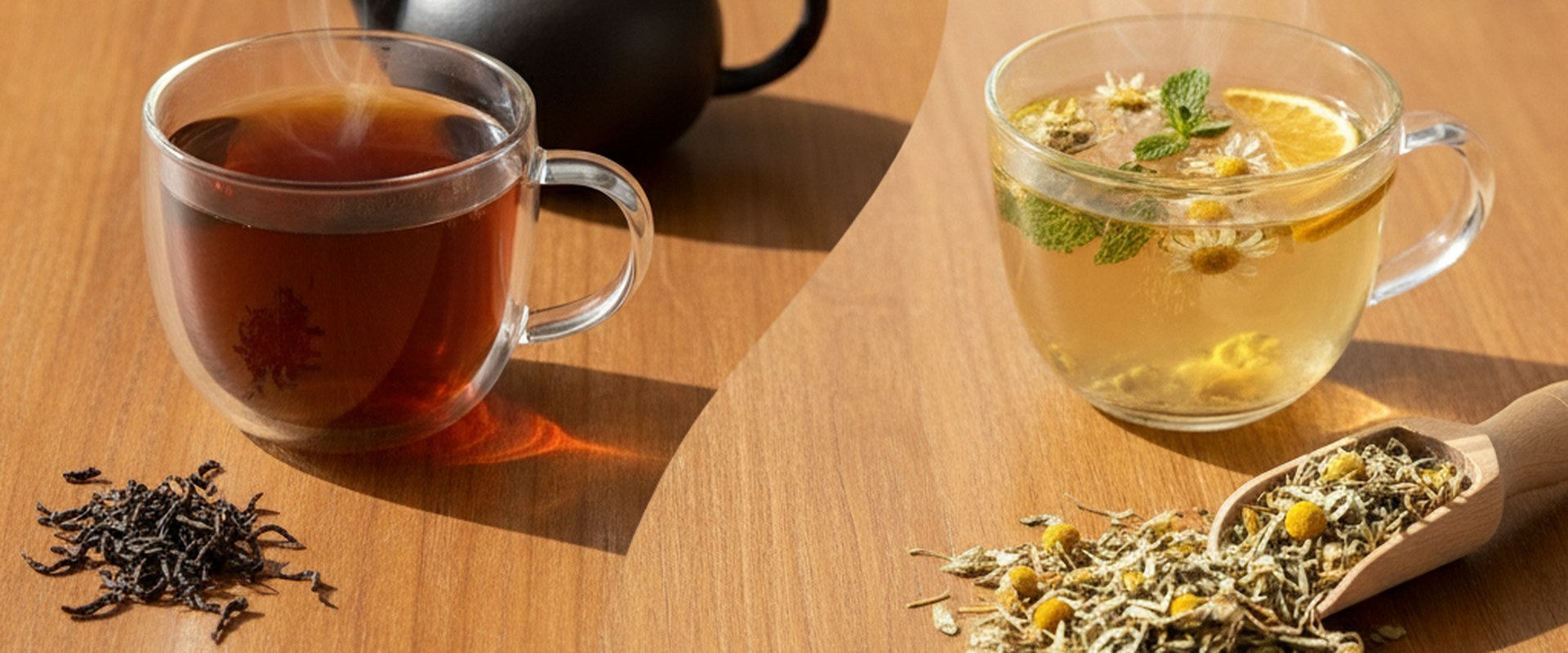
One and the same leaf — Camellia sinensis — can both energize no worse than coffee and gently soothe. Everything is decided by two substances and the processing method: caffeine, which tones, and the amino acid L-theanine, which smooths out its harshness and gives calm concentration. And herbal “teas” — essentially infusions without tea leaf — contain no caffeine at all. Let’s look at which tea energizes, which soothes and what to drink for a specific task.
What the effect of tea depends on
Any real tea — black, green, oolong, pu-erh, white — contains caffeine, and that gives the energy. But alongside it L-theanine works: it reduces nervousness and the “rattle” from caffeine, so tea energy is milder and more even than coffee energy — without the sharp spike and the subsequent slump. The more caffeine and the less theanine in the cup, the stronger it tones; the other way around, the calmer the effect. And herbal blends (chamomile, mint, hibiscus) are botanically not tea and contain no caffeine — that’s why they relax.
Brewing also matters: the hotter the water and the longer the steep, the more caffeine passes into the cup. So even the same tea can be brewed “more energizing” or “milder.”
Which tea energizes
Black tea
The most obvious “morning” option: among the familiar varieties black tea has the most caffeine, and the effect is noticeable and lasting. Strong black in the morning is a good replacement for coffee for those whose heart rate speeds up from coffee. More about varieties — in the article on black tea.
Shou pu-erh
A dense fermented tea with an “earthy” taste that energizes well and is at the same time gentle on the stomach — it’s often drunk in the morning and afternoon. How shou differs from sheng we covered in the article on the difference between shou and sheng pu-erh.
Green tea and matcha
Green energizes more gently than black, but thanks to its high L-theanine it gives “calm concentration” — just what’s needed for work and study without nervousness. Matcha (ground green leaf) is the most concentrated version of this effect.
Which tea soothes
Herbal infusions
Chamomile, mint, lemon balm, linden — caffeine-free, they help you relax and fall asleep more easily. The classic evening choice when energy isn’t needed at all.
Jasmine and white tea
Jasmine on a green base, with a short, light brew, gives more aroma and less strength — a soft, soothing drink results. About it separately — jasmine tea. White tea is the least processed and delicate, with low strength.
How to “calm” any tea
Even energizing black can be made milder: brew it cooler (80–85 °C), shorter (1–2 minutes) and pour off the first quick infusion — part of the caffeine goes away with it.
Which tea for digestion
After a heavy meal pu-erh goes down well — it’s traditionally drunk to remove the feeling of heaviness. After fatty food green and oolong are also appropriate. About pu-erh’s properties — in the article on the benefits and harms of pu-erh, and the varieties themselves — in the catalog of pu-erh.
How the time of day affects the choice
Morning and the first half of the day — black, shou pu-erh, green: energy and concentration. After lunch — green or oolong of medium strength. Evening — herbal, weak jasmine, white. It’s better not to drink strong caffeinated tea 4–6 hours before sleep, otherwise falling asleep will be harder.
How much energy there is in different teas
The exact caffeine figures depend on brewing, so the table below is a guideline by effect, not a pharmacy dosage.
| Type of tea | Effect | When to drink |
|---|---|---|
| Black | strongly energizing | morning |
| Shou pu-erh | energizing, gentle on the stomach | morning — day |
| Green / matcha | energizes gently, gives focus | day |
| Oolong | medium tone | day |
| White | weak tone | day — evening |
| Jasmine (weak) | soft, soothing | evening |
| Herbal (without tea leaf) | soothing, 0 caffeine | evening / night |
Common myths
“Green tea has no caffeine” — it does, the effect is just milder because of L-theanine. “Pu-erh doesn’t energize” — it very much does, especially shou. “Herbal tea is tea” — botanically no, it’s an infusion of herbs without tea leaf, and that’s exactly why it has no caffeine. Understanding these nuances helps you avoid mistakes in choosing by time of day. If you want to understand the varieties systematically, start with the overview types of Chinese tea.
Frequently asked questions
Which tea is the most energizing?
Strong black tea — it has the most caffeine among the familiar varieties. Shou pu-erh and matcha are close to it. Brewed hotter and longer, they energize more strongly.
What tea to drink in the evening to fall asleep?
Caffeine-free herbal infusions (chamomile, mint, lemon balm) or weak jasmine and white tea. It’s better not to drink strong black, green and pu-erh in the evening.
Is it true that green tea energizes more weakly than coffee?
Yes. It has less caffeine, and L-theanine makes the energy milder and more even — without the sharp spike and slump you get from coffee. That’s why green is good for calm concentration.
What is L-theanine?
It’s an amino acid of the tea leaf. It smooths the action of caffeine and gives a state of calm focus — energy without nervousness. There’s especially a lot of it in green tea and matcha.
What tea to drink for concentration and work?
Green tea or matcha: they energize gently but, thanks to L-theanine, hold focus without the “jitters.” A good option for study and long tasks.
Can you drink tea at night?
Strong caffeinated tea within 4–6 hours of sleep is undesirable. But a herbal infusion (without tea leaf) can be drunk even before bed — on the contrary, it helps you relax.
What tea to drink after food?
Pu-erh is traditionally drunk after a heavy meal to remove heaviness. Green and oolong are also appropriate, especially after fatty food.
The key points in brief
Energy or calm is set by the balance of caffeine and L-theanine: black tea and shou pu-erh energize the most, green and matcha give even focus, while white, weak jasmine and herbal infusions soothe. Plus brewing decides a lot: hotter and longer — more energizing, cooler and shorter — milder. Choose tea by the time of day and the task — and one and the same leaf will work for you both in the morning and in the evening.