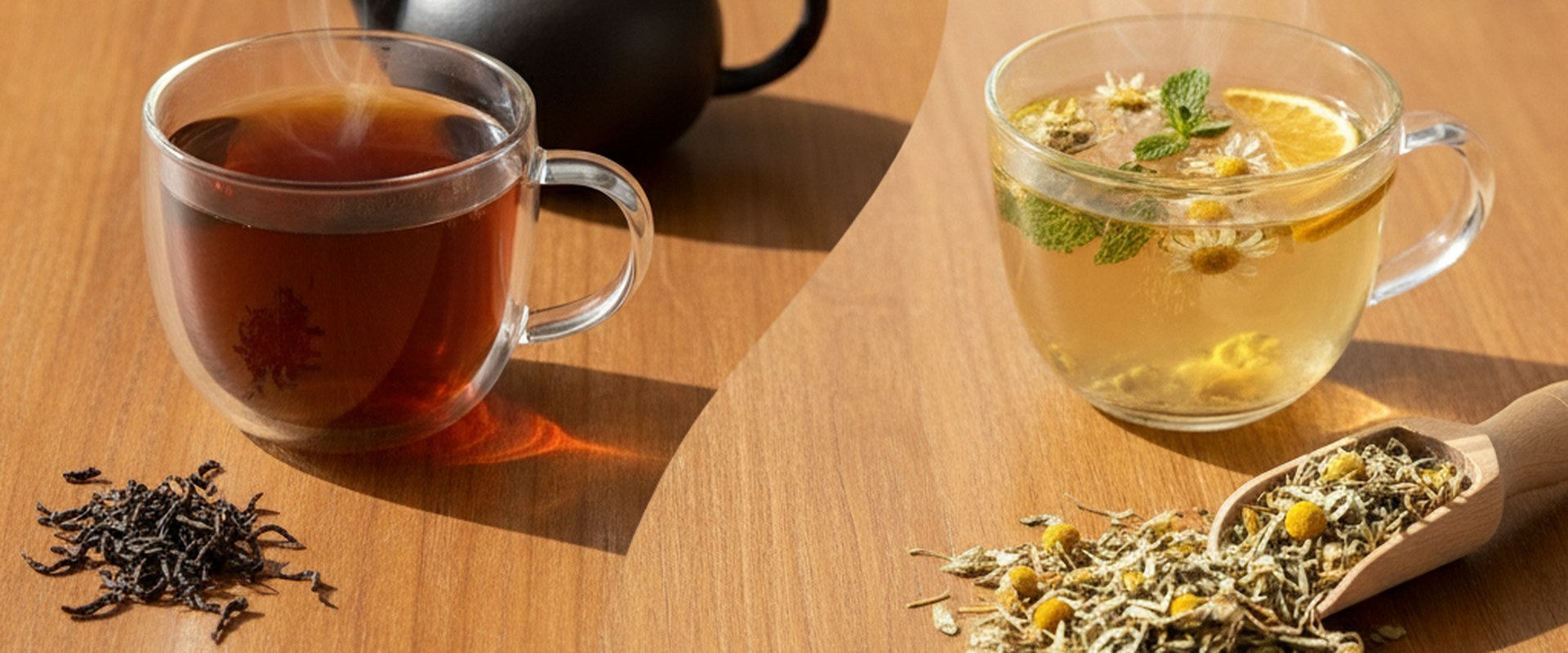




Ceylon tea is black tea from Sri Lanka. Until 1972 the island was called Ceylon, and although the country changed its name long ago, the name stuck firmly to the tea — it remained on packaging, in price lists and in search queries. Such tea is recognized by its bright copper-amber infusion, light citrus tartness and even strength without heaviness.
But “Ceylon tea” isn’t a single taste. Behind this word hide teas from plantations of different altitudes and leaf of different grading: from light high-grown to dense low-grown, from large whole leaf to fine dust in bags. Below, in order: what Ceylon is famous for, what the letters mean OP and Pekoe on the pack, how to choose good leaf and how to brew it so it doesn’t turn bitter.
What Ceylon tea is
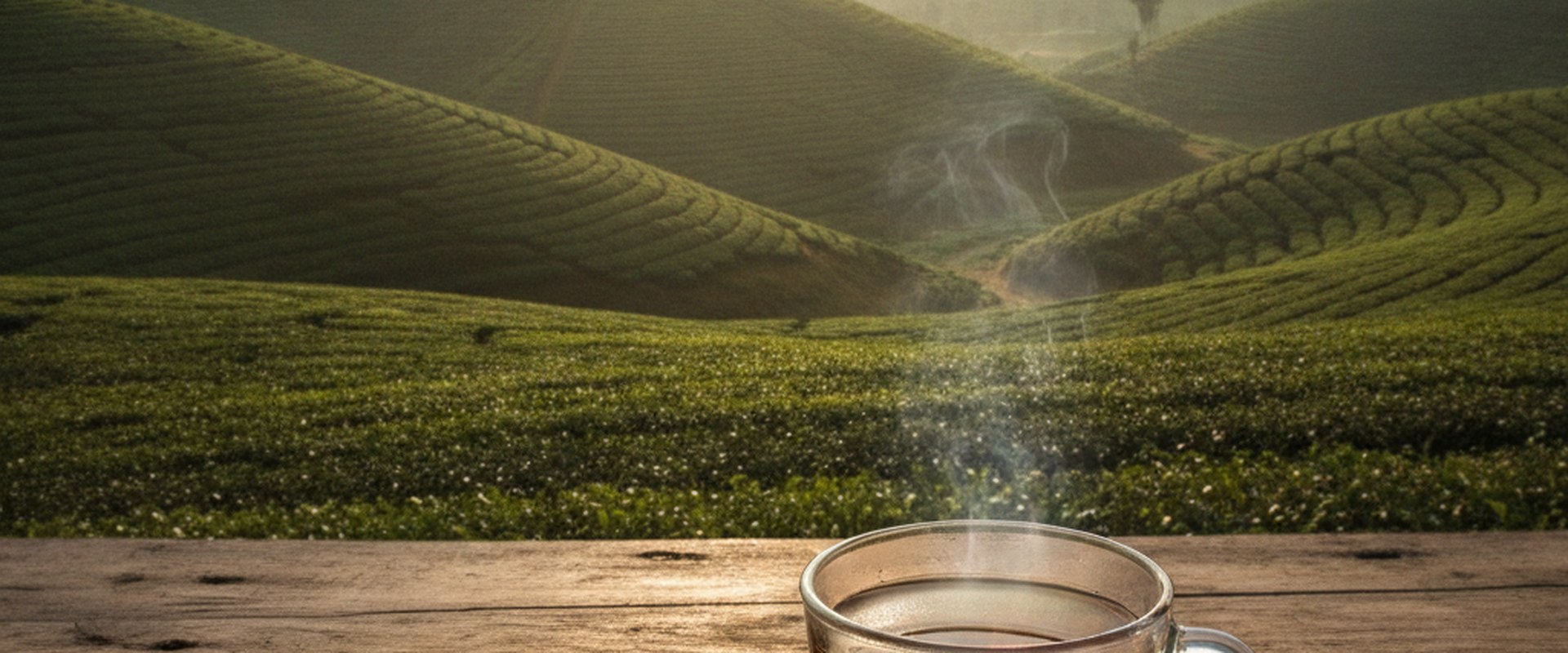
Ceylon is grown in Sri Lanka — an island in the Indian Ocean with a humid climate and mountains in the center. The combination of altitude, monsoons and volcanic soil gives the leaf that very brightness for which it’s valued. Predominantly this is black orthodox tea, though green and white tea are also made on the island.
The authenticity of true Ceylon is confirmed by the mark — a lion with a sword (Lion logo, “Ceylon Tea”) on the packaging. It means the tea is 100% grown and packed in Sri Lanka, not mixed with cheap raw material from other countries. In essence Ceylon is a subtype of black tea, so its benefits, composition and contraindications are the same as any black; they’re covered in detail in the piece on the benefits and harms of black tea.
What Ceylon is famous for: taste and character
Ceylon’s main feature is brightness. The infusion comes out a rich copper color, and in the taste there’s even astringency, a dense body and a characteristic citrus tartness reminiscent of lemon peel. It’s not acidity in the mouth but aroma: a good Ceylon invigorates and refreshes at once.
Thanks to this versatility Ceylon became the base of most “classic” blends and breakfast tea. It holds both milk and lemon well without falling apart in taste — that’s why it made it into the standard English tea ritual.
Plantation regions and altitude
Ceylon’s taste is set first of all by the altitude at which the leaf grew. Sri Lankans divide the tea into three groups, and the difference between them is heard at once.
High grown (above 1200 m)
The districts of Nuwara Eliya, Dimbula, Uva. The infusion is lighter, and in the taste there’s subtle citrus, florality and delicate astringency. This is the “ceremonial” Ceylon drunk pure, without milk.
Mid grown (600–1200 m)
Primarily Kandy. The tea is stronger and fuller than high-grown, with a dense copper infusion — the golden mean between lightness and strength.
Low grown (below 600 m)
Ruhuna, Sabaragamuwa. The darkest, densest and most malty Ceylon. It gives a strong, almost black infusion — an ideal base for tea with milk and for those who like it “stronger.”
Leaf markings: what OP, Pekoe and BOP mean
The letters on a Ceylon pack are neither a variety nor a taste, but the grading of the leaf by size and type. Understand the marking and you understand what will end up in the cup: whole leaf brews milder and longer, cut and fine leaf — stronger and faster.
| Marking | Meaning | Leaf | Infusion |
|---|---|---|---|
| OP (Orange Pekoe) | large whole leaf | long, twisted | soft, fragrant, lighter |
| Pekoe | shorter whole leaf | tightly twisted | even, balanced |
| Super Pekoe | select large leaf | uniform, neat | rich, clean taste |
| BOP (Broken OP) | cut leaf | small fragments | strong, gives color quickly |
| Fannings / Dust | crumbs and dust | fines for tea bags | very strong, easily turns bitter |
An important point: “Orange” in Orange Pekoe isn’t about the orange fruit and isn’t about taste. It’s an old European classification of leaf quality, not flavoring. In our catalog, for example, there are whole-leaf Ceylon Super Pekoe and classic Ceylon Pekoe — through them it’s convenient to feel the difference between select large and ordinary whole leaf.
How to choose a quality Ceylon tea
The difference between good and bad Ceylon is visible even before brewing. What to look at:
- Leaf, not dust. Whole or coarsely cut leaf brews softly and gives taste gradually. The fine crumbs from cheap bags turn bitter quickly and fade in a couple of minutes.
- Uniformity. In a quality batch the leaves are roughly the same size, without twigs and crumbs.
- The marking on the packaging. OP, Pekoe, BOP and the lion mark (Ceylon Tea) are a sign that the producer understands what they’re selling.
- The aroma of the dry leaf. Real Ceylon smells of tea — warm wood and citrus. A sour, musty or “nondescript” smell is a bad sign.
The entire black range, including Ceylon varieties, is gathered in the the black tea catalogue — there both the marking and the weight are shown.
How to brew Ceylon tea properly
Ceylon loves hot water but doesn’t tolerate over-steeping. The basic regimen:
- Water: 90–95 °C. For high-grown it’s better to cool the fierce boiling water a little so as not to burn the subtle aroma.
- Proportion: 3–4 g of leaf (a heaped teaspoon) per 200–250 ml.
- Time: whole leaf (OP, Pekoe) — 4–5 minutes, cut (BOP) — 3 minutes. Over-steep it and a sharp bitterness and astringency will appear.
- Infusions: black Ceylon is designed for 1, at most 2 infusions — it isn’t pu-erh, after that the taste empties out.
Milk softens strong low-grown Ceylon well, and lemon lightens the infusion — that’s a normal reaction of tannins, not “chemistry.”
Ceylon, Indian and Chinese tea: what’s the difference
Ceylon is often compared with its neighbors in the black cluster. Briefly: Indian Assam is thicker and maltier, goes under milk; Darjeeling is finer, with a muscatel note; Chinese Yunnan (Dian Hong) is milder and more honeyed. Against them Ceylon is the brightest and most citrusy, with medium strength and a versatile character. If you want to understand Chinese varieties more deeply, there’s a separate overview types of Chinese tea.
What and when to drink Ceylon tea with
Ceylon is a daytime tea. In the morning and afternoon it invigorates; in the evening, because of caffeine, it’s better to choose something lighter. It’s drunk both pure and with milk, lemon or honey; it pairs well with baked goods and dried fruit. The most famous flavored black is also made on a Ceylon base — Earl Grey tea with bergamot.
Frequently asked questions
Why is the tea called Ceylon if Ceylon no longer exists?
The island was renamed Sri Lanka in 1972, but the name “Ceylon tea” became a stable brand. Today it’s an official category: tea grown in Sri Lanka is marked with the lion sign “Ceylon Tea.”
Is Ceylon tea necessarily black?
In the vast majority of cases yes: Sri Lanka is famous precisely for black orthodox tea. Green and white Ceylon are also made, but their share is small, and in shops “Ceylon” almost always means black.
What do Pekoe and OP on the packaging mean?
It’s the grading of leaf by size, not taste. OP (Orange Pekoe) is large whole leaf, Pekoe is shorter, BOP is cut and stronger, Fannings and Dust are fines for tea bags. “Orange” has nothing to do with the orange fruit.
Which Ceylon tea is the strongest?
Low grown from the Ruhuna and Sabaragamuwa districts, as well as cut BOP leaf. They give a dark dense infusion and open up well with milk. High-grown Ceylon, on the contrary, is lighter and more fragrant.
Can you drink Ceylon tea with milk?
Yes, especially the strong low-grown varieties — milk softens the astringency. High-grown Ceylon is usually drunk pure so as not to drown out the subtle citrus aroma.
How can you tell real Ceylon from a fake?
Look for the lion mark (Ceylon Tea) and the leaf marking on the packaging, whole leaf instead of dust and a clean tea aroma. Blends of unclear origin in cheap bags are most often only called Ceylon.
How many times is Ceylon tea brewed?
Once, at most twice. Black Ceylon gives its taste almost entirely to the first infusion; from the second it weakens noticeably, and after that it empties out.
The key points in brief
Ceylon tea is a bright black tea from Sri Lanka with citrus tartness and even strength. The taste depends on the plantation altitude (light high-grown or dense low-grown) and on the leaf grading (whole OP and Pekoe versus cut BOP and dust). Choose whole leaf with the lion mark, brew with 90–95 °C water for 3–5 minutes — and you’ll get that rich copper infusion for which Ceylon is loved all over the world.